

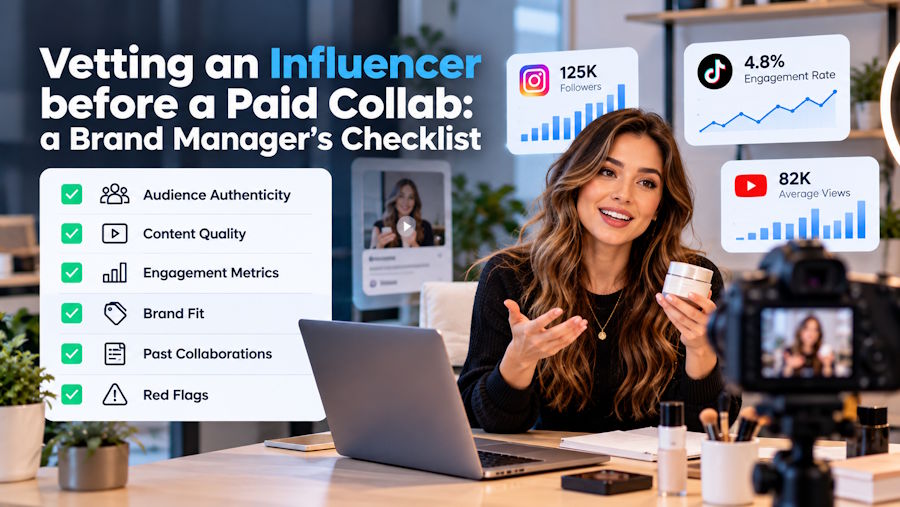
The pitch looks great. A creator in your niche, a polished media kit, a strong engagement rate, a few recognizable brands in the "past partners" section. They'd love to work together, and they can start next week.
Most of the time, that's exactly what it is. But influencer marketing has its own set of problems: inflated audiences, recycled media kits, agencies that don't represent the people they say they do, and occasionally a "creator" who is just borrowing someone else's face. A short vetting routine protects your budget and your brand, and it's fairer to genuine creators, who lose out when budgets go to fakes.
Here's a checklist you can run in under an hour.
1. Match the pitch to the account
Start by making sure the person pitching you actually controls the account they're pitching.
- Check the handle character by character. Lookalike handles with an extra underscore or a swapped letter are a classic trick.
- Reply through the account itself. Ask them to confirm the collab by DM from the handle in the media kit, or to add a short line to their bio for a day. Someone who controls the account can do this in a minute.
- Compare contact details. The email in the pitch should match the business email in the account's bio or on the creator's own website.
- Be careful with agencies. If a manager or agency is pitching on the creator's behalf, confirm the relationship with the creator directly.
2. Confirm the person is who they say they are
This step matters most when a pitch arrives by email or through a marketplace, with photos attached and a handle you've never seen.
Media kits are easy to copy. Some fake pitches use a real creator's photos with a different name. Others use the photos to pose as the real creator and redirect payment. Either way, the face in the kit should lead back to one consistent, long-running account.
If something doesn't add up, a face search is a quick way to check. Rather than relying on the handle you were given, you can find instagram account by photo by running the creator's headshot through a face-search tool such as the Facial Recognition app. It compares the face with public profile photos and public web pages, so it can show whether the same person appears under a different, older handle. It's free to download on Android, with face searches on a paid in-app subscription, and it only covers public content.
If the face leads to an established account with a different name, contact that account directly. You may have just found the real creator, and they'll want to know.
3. Check the audience, not just the number
Follower counts are the easiest metric to fake. Look underneath them.
- Growth pattern. Steady growth is normal. Sudden jumps of tens of thousands of followers with no viral post to explain them suggest bought followers.
- Engagement rate. Divide average likes and comments on recent posts by the follower count. Very low engagement on a huge audience is a warning sign. So is engagement that's suspiciously high and uniform.
- Comment quality. Read the comments, not just the count. Real audiences ask questions, tag friends, and disagree. Engagement pods and bots leave short, generic praise and emoji strings.
- Audience location and age. Ask for screenshots of Instagram Insights, or better, a short screen recording of the creator scrolling through them live, which is harder to fake than a static image. Make sure the audience matches the market you're paying to reach.
4. Review the content history
You're not just buying reach. You're putting your brand next to someone's body of work.
Scroll back at least a year. Look at captions, comments the creator replies to, and any controversies in their niche. Check other platforms they're active on, since tone sometimes differs. You're not looking for perfection, but you should know what's there before your logo appears beside it.
5. Verify past partnerships
"Worked with" sections are easy to pad.
- Look for the posts. Genuine paid collaborations usually carry Instagram's "Paid partnership" label or a clear disclosure.
- Ask for results. A reasonable creator can share what a previous campaign achieved, with the partner's permission.
- Contact a past partner. A quick email to a brand they've worked with is a simple reference check, and most marketing teams will reply.
6. Get the contract and payment right
Even a genuine creator relationship can go wrong if the paperwork is loose.
- Use a written agreement. It should cover deliverables, timelines, usage rights, disclosure requirements, and what happens if posts are deleted early.
- Pay to a verified business account, in the creator's name or their registered company's name. Be wary of last-minute changes to payment details, a common fraud pattern.
- Avoid full payment upfront. Splitting payment between signing and delivery is normal, and genuine creators expect it.
- Never pay by gift card or crypto unless that's genuinely your standard practice and the identity is verified.
Red flags at a glance
- Urgency: "I have another brand waiting, I need an answer today."
- Payment details that don't match the creator's name.
- Refusal to confirm the collaboration from the account itself.
- Insights shared only as cropped screenshots.
- A media kit with photos that lead to a different handle.
- An "agency" email address on a free webmail domain.
Keep vetting proportionate
Good vetting is about the business relationship: who you're paying, who controls the account, and whether the audience is real. It isn't a background check on someone's private life, and it shouldn't feel like one to the creator. Most genuine influencers are happy to verify themselves, because they've been impersonated too.
Before your next collab goes out, run steps 1 and 2. They take ten minutes and catch the problems that cost the most.

