

How to Size a CPAP Backup Battery for Outages
If you rely on a CPAP machine every night, a sudden power outage can interrupt your sleep therapy. Having a reliable backup power source helps you prepare for unexpected interruptions and maintain your nightly routine.
Finding the best CPAP backup battery requires considering more than battery capacity. Your machine’s power needs, expected outage duration, and daily usage habits all affect your choice. This guide explains how to estimate your energy requirements and prepare a suitable backup solution.
Key Takeaways
- Check your CPAP machine’s power requirements, including wattage and voltage, before choosing a backup battery.
- Calculate the battery capacity needed for your expected outage duration, allowing extra energy for conversion losses and unexpected power demands.
- Consider how heated humidifiers, heated tubes, battery condition, and power delivery methods affect actual runtime.
- Compare dedicated CPAP batteries with portable power stations, verify compatibility, and test your backup setup before a power outage.
What is a CPAP Backup Battery
A CPAP backup battery provides temporary power for a continuous positive airway pressure (CPAP) machine when access to a regular power supply is unavailable. It helps users continue their sleep therapy during power outages, travel, or outdoor activities. These backup power options include dedicated CPAP batteries and portable power stations, with the right choice depending on individual needs and usage scenarios.
How to Calculate the Right CPAP Backup Battery Capacity
A CPAP backup battery helps keep your sleep therapy running during a power outage. To choose the right capacity, start by checking your machine’s power requirements, then estimate your energy needs and account for electricity lost during conversion.
Check Your CPAP Machine’s Power Requirements
Check your CPAP machine’s user manual or power adapter label for its rated wattage, voltage, and current. If the manufacturer provides typical power consumption, use that figure for a more realistic estimate. Also check whether your setup includes a heated humidifier or heated tube, as these accessories can increase electricity demand.
Calculate Battery Capacity for Your Expected Outage Duration
Multiply the CPAP machine’s average power consumption in watts by the number of hours you expect to use it. For example, a machine averaging 30W over eight hours requires 240Wh of energy. For longer outages, calculate your needs across multiple nights based on your expected nightly usage and total backup duration.
Account for Power Conversion Losses and Extra Capacity
A battery’s rated capacity is not always fully available to your CPAP because power conversion and the device’s internal systems consume some energy. If using an AC outlet, account for inverter losses when estimating capacity. Choose additional capacity beyond your calculated needs to accommodate these losses, variations in power consumption, and unexpected delays in restoring electricity.
What Affects CPAP Backup Battery Runtime
Even after calculating your estimated energy needs, the actual runtime of a CPAP backup battery can vary. Several factors affect how quickly the battery drains, so consider the following when planning for a power outage.
- Heated humidifiers and heated tubes: These accessories consume additional electricity to warm water and air. Turning them off or reducing their heat settings, if appropriate for your therapy, can help extend battery runtime.
- CPAP machine model and pressure settings: Different CPAP machines have different power requirements. Higher energy demand can reduce battery runtime, so check your machine’s specifications and typical power consumption.
- Battery capacity and usable energy: A battery with a larger capacity can generally power your CPAP for longer under similar conditions. However, conversion losses and battery operating limits mean that not all stored energy may be available.
- Power delivery method: Using an AC outlet involves inverter losses. A compatible DC connection may reduce energy loss, but confirm that the voltage, connector, and power requirements match your CPAP machine.
- Battery condition and operating environment: Battery age, temperature, and overall condition can affect available energy. Cold conditions may reduce battery performance, while an older battery may provide less usable capacity than when it was new.
How to Choose and Prepare a CPAP Backup Power Solution
Choosing a suitable backup power source depends on your CPAP’s energy needs and expected outage duration. Testing your setup in advance can help ensure reliable operation when the power goes out.
Backup Power Options for CPAP During Outages
Dedicated CPAP batteries are compact and designed for sleep therapy, while portable power stations can also support other household essentials. For longer outages, a larger power station may be useful for households with multiple backup power needs.
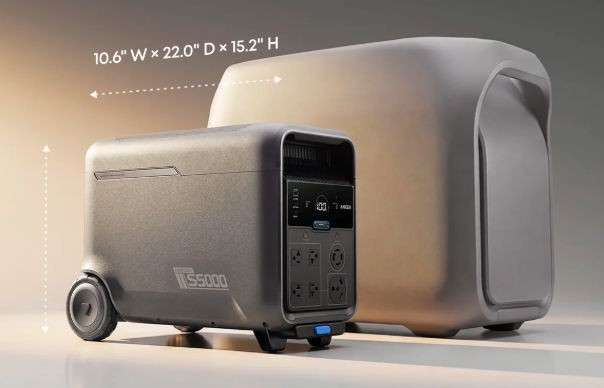
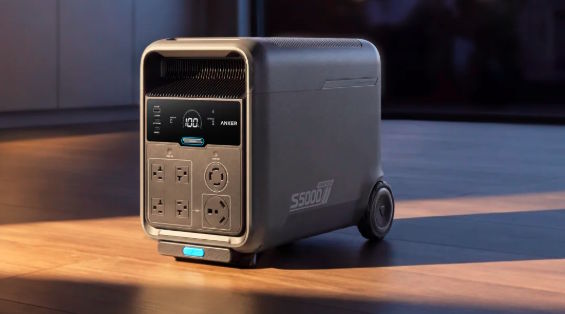
The Anker SOLIX S5000 offers 5,024Wh of battery capacity and 4,500W of rated AC output. Its expandable capacity and AC and solar charging options provide flexibility for extended home backup. However, confirm CPAP compatibility and estimate runtime based on your machine’s power consumption before use.
Test Your Backup Setup Before a Power Outage
Fully charge the battery and connect your CPAP using a compatible, manufacturer-approved method. Confirm that the machine works correctly with your usual settings.
Monitor battery consumption during a test session to estimate runtime. If the available capacity cannot cover your expected outage duration, consider additional capacity or another backup option. Keep the necessary cables accessible for emergencies.
Conclusion
Choosing the right CPAP backup battery for outages starts with understanding your machine’s power requirements and estimating how long you need it to run. Consider factors such as heated accessories, conversion losses, and usable battery capacity when calculating your needs.
Compare suitable backup options, verify device compatibility, and test your setup before an emergency. With proper preparation, you can better maintain your sleep therapy routine during unexpected power interruptions.
FAQs
How many watt-hours do you need for a CPAP backup battery?
The required capacity depends on your CPAP’s average power consumption and how long you need it to run. Multiply its average wattage by the number of hours required to estimate energy needs in watt-hours (Wh). Then allow extra capacity for power conversion losses and variations in consumption.
Can a portable power station run a CPAP machine during a power outage?
Yes, a portable power station can run a CPAP machine if its output, voltage, and connection method are compatible with the device. Check the CPAP manufacturer’s power requirements before connecting it. Make sure the battery has sufficient usable capacity to support your expected usage throughout the outage.
Does using a CPAP humidifier reduce battery runtime?
Yes, a heated humidifier and heated tube typically increase electricity consumption, which can shorten battery runtime. The effect depends on the machine model and heat settings. If longer runtime is necessary, check your device’s instructions to determine whether these features can be adjusted or disabled safely and comfortably.

