


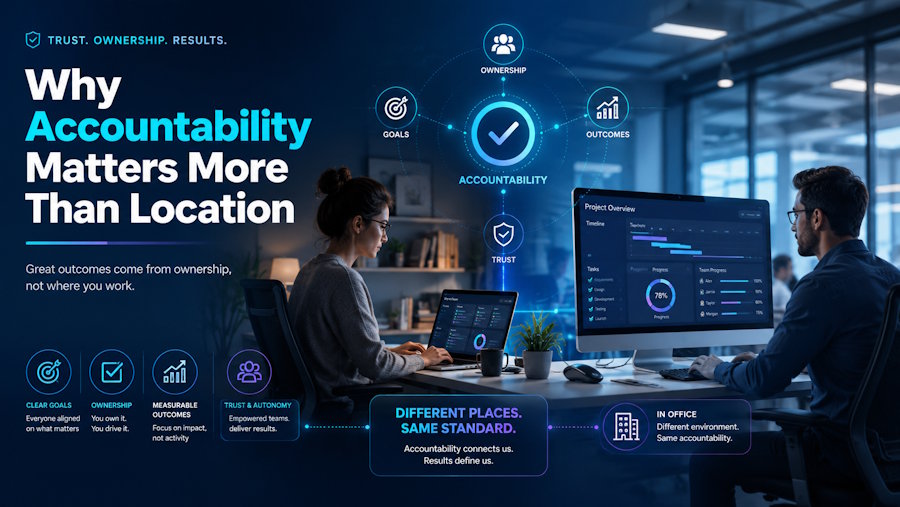
Ask most business owners in British Columbia where Canadian privacy law requires their data to be stored, and a surprising number will confidently answer "in Canada." That answer is usually wrong — or at least, wrong for the business they're actually running. The real legal standard governing most private-sector data in Canada isn't about geography at all. It's about accountability, and that distinction has real, practical implications for how a business chooses its cloud infrastructure.
What the Law Actually Says
Canada's federal private-sector privacy law doesn't require personal information to physically stay within Canadian borders. Under PIPEDA, an organization is responsible for personal information in its possession or custody, including information that has been transferred to a third party for processing — meaning the organization remains accountable no matter where that processing actually happens, according to the Office of the Privacy Commissioner of Canada's guidance on the PIPEDA accountability principle. PIPEDA does not prohibit organizations from transferring personal information to a provider in another jurisdiction for processing — it simply requires the transferring organization to ensure that information receives comparable protection while it's there.
This isn't a loophole or a gray area — it's been tested and confirmed directly through formal investigation. In a case involving a Canadian bank that transferred customer data to a service provider in India for processing, the Office of the Privacy Commissioner found that the bank remained accountable for that information under PIPEDA's Principle 4.1.3, regardless of the physical location where the processing occurred, according to PIPEDA Findings #2020-001. The question the regulator actually asked wasn't "where is the data" — it was "is the organization ensuring comparable protection and being transparent with customers about the arrangement."
Where This Confusion Breaks Down
The confusion usually stems from conflating two very different regulatory regimes that happen to exist in the same province. British Columbia's Freedom of Information and Protection of Privacy Act — FIPPA — does impose a genuine data residency requirement, but it applies specifically to public bodies: government ministries, school districts, health authorities, municipalities, and similar public-sector organizations, not private businesses. Under FIPPA, personal information under a public body's control generally cannot be stored or accessed outside of Canada, with only narrow exceptions.
Private businesses in BC operate under a different law entirely — the Personal Information Protection Act, BC's private-sector equivalent of PIPEDA — which follows the same accountability-based approach as its federal counterpart rather than FIPPA's residency mandate. A private company doing business with, or modeled after the practices of, a public-sector client can easily absorb an assumption that doesn't actually apply to its own legal obligations, simply because the two regimes get discussed together so often. This mix-up is common enough that it's worth resolving with an actual expert before making an infrastructure decision — working with comprehensive IT solutions in Vancouver that understand both regimes can prevent a business from unnecessarily narrowing its options based on a rule that was never written for it in the first place.
Why This Distinction Actually Matters for Cloud Decisions
Getting this right isn't just a legal technicality — it has real, practical consequences for how a business evaluates its cloud infrastructure options. A business operating under the mistaken belief that all its data must stay physically within Canada may unnecessarily restrict itself to a narrower, sometimes more expensive or less capable, set of hosting options, when the actual legal requirement is about contractual accountability and comparable protection, not physical geography.
That said, accountability under PIPEDA isn't a lower bar just because it's not about location — it comes with real obligations. An organization must use contractual or other means to ensure a comparable level of protection while data is being processed by a third party, and must be transparent with customers about the arrangement, including the fact that information may become accessible to courts or authorities in the jurisdiction where it's processed, according to the OPC's guidelines for processing personal data across borders. A business that understands this correctly isn't choosing between "compliant" and "not compliant" based on a map — it's choosing a provider that can demonstrably meet these contractual and transparency obligations, wherever that provider's infrastructure happens to be located.
What This Looks Like for a BC Business in Practice
A few practical distinctions follow directly from this framework:
Private businesses generally have more cloud flexibility than they assume. Unless a business is contracting with a public body, handling health information under a provincial equivalent of PHIPA, or operating in a specifically regulated sector, PIPEDA's accountability standard — not physical residency — is usually the applicable rule.
Contracts with cloud and processing providers need to actually address accountability, not just claim Canadian servers. A vendor agreement that specifies comparable protection standards and transparency commitments matters more, legally, than a marketing claim about data center location.
Businesses serving public-sector clients face a different standard entirely. If a business handles data on behalf of a school district, health authority, or municipal government, FIPPA's residency requirements likely apply to that specific engagement, even if the business's own general operations fall under PIPA.
Transparency with customers is a genuine legal requirement, not just good practice. Businesses need to be upfront that data may be processed outside Canada and could be accessible under that jurisdiction's laws — quietly assuming this doesn't need disclosure is itself a compliance gap.
What This Means for the Next Infrastructure Decision
Location matters far less than most BC business owners assume, and accountability matters far more. Understanding that distinction — genuinely understanding what PIPEDA and PIPA require versus what FIPPA requires for an entirely different category of organization — is what separates a business making an informed infrastructure decision from one restricting itself based on a rule that was never actually written for it.

