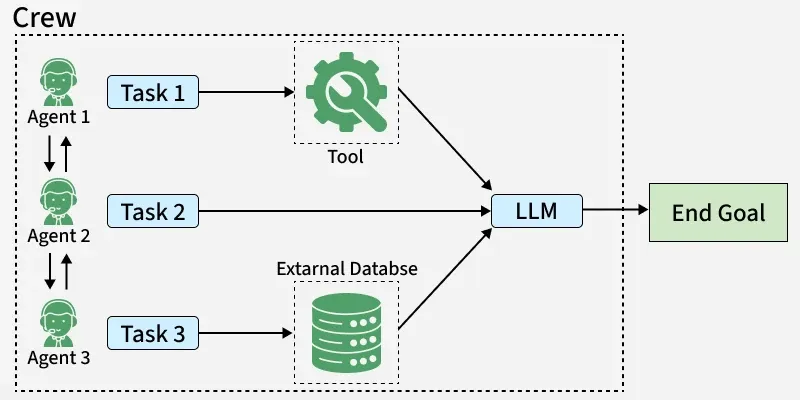
AI agents aren't stuck in demo land anymore. According to Gartner, 33% of enterprise software applications will include agentic AI by 2028, up from less than 1% in 2024.
You can already see this shift in how teams build. Nobody's writing one clever prompt and hoping it works. To enable the system to plan, act, and correct its own errors along the way, they are integrating tools, memory, and multi-step reasoning.
This is the issue. You will have to repeat half of your work in six months if you choose the incorrect framework too soon. There are plenty of solutions vying for your attention, yet GitHub Star numbers don't really reveal which ones stand out once users start using them.
Here's what Vineet Gupta, founder of 2xSaS, has to say:
"Most teams pick a framework based on hype, then rebuild everything once it hits production. At 2xSaS, we've learned the hard way that the framework matters less than how well it handles failure, retries, edge cases, and bad data. Start with what breaks least, not what demos best."
With that out of the way, here are five frameworks worth your time this year.
Quick Comparison of the 5 AI Agent Frameworks
| Framework | Best For | Learning Curve |
|---|---|---|
| LangGraph | Complex, production-grade workflows | Moderate to high |
| CrewAI | Fast multi-agent prototypes | Low |
| Microsoft Agent Framework | Enterprise, Azure/.NET teams | Moderate |
| Claude Agent SDK | Code-heavy, single-provider agents | Low to moderate |
| LlamaIndex Workflows | Retrieval-heavy, document-based agents | Moderate |
1. LangGraph
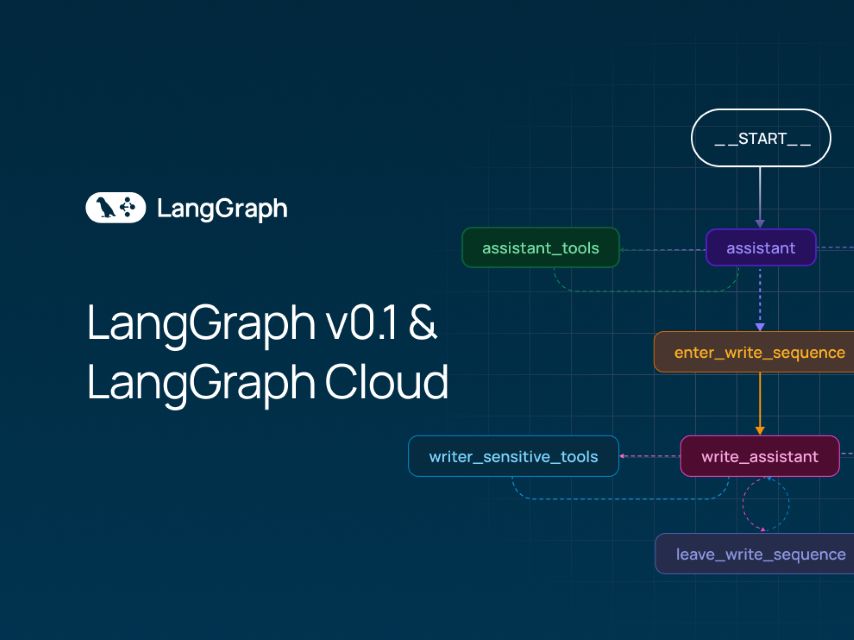
LangGraph comes from the LangChain team, and it has become the default pick for developers who need agents that don't fall apart under real traffic.
Instead of running a workflow as a straight line, LangGraph treats it as a graph. Each node is a step, and the edges decide how control flows between them. That makes branching logic, retries, and long-running tasks much easier to manage than a basic chain ever could.
Why developers pick it:
- Handles complex state machines and multi-step workflows without breaking
- Lets you add human checkpoints for approvals or reviews
- Debugging and observability are strong, thanks to LangSmith. For teams tracking how their agents show up across AI search surfaces, Similarweb's AI brand visibility suite can pair well as an external monitoring layer
- Plays well with almost any LLM provider, so you're not locked into one
Setup takes longer than most alternatives. But if your agent has to survive edge cases, compliance reviews, and users, that extra setup time pays for itself.
2. CrewAI
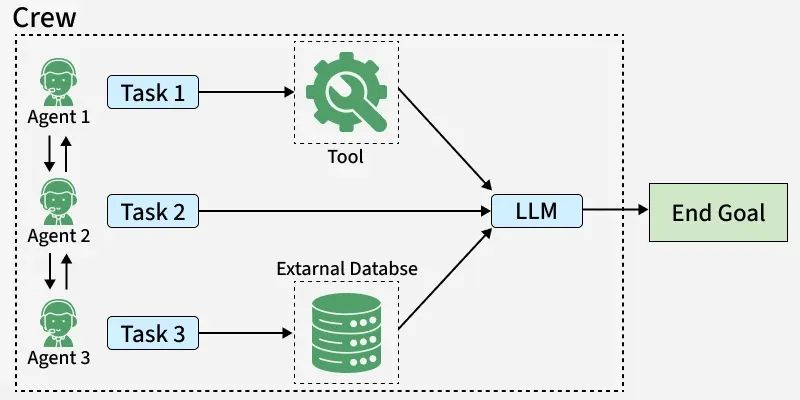
CrewAI works differently. Rather than a graph, it organizes agents into a "crew," where each one plays a role like researcher, writer, or reviewer, and passes work down the line.
It's basically how a human team runs a project, which is why it's so easy to design multi-agent systems around it.
Where CrewAI shines:
- Gets you from idea to a working multi-agent prototype quickly
- Syntax stays simple, so you don't need to master the framework before shipping something
- Good fit for content pipelines, research assistants, and task delegation. If you're building an AI workflow around visual assets, a repeatable AI image generation workflow for product teams can be handy.
- Active community, and updates come often
A lot of teams start here to test an idea, then move to something heavier once the project needs to scale.
3. Microsoft Agent Framework
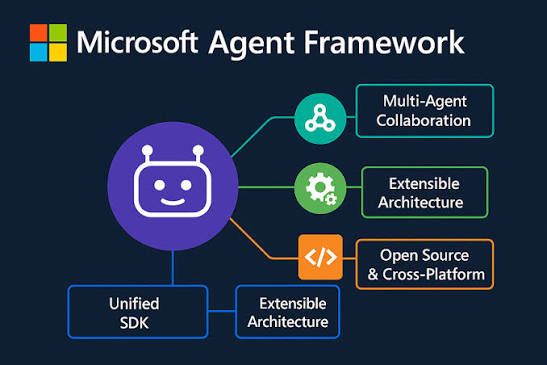
Microsoft folded its two agent tools, Semantic Kernel and AutoGen, into one release called Microsoft Agent Framework 1.0. It kept AutoGen's strength in multi-agent conversation and added Semantic Kernel's enterprise plugin and orchestration layer on top.
It also ships with native support for the Model Context Protocol (MCP) and Agent-to-Agent (A2A) protocol, in both .NET and Python.
Key strengths:
- Agents can communicate, challenge each other, and delegate tasks to solve complex problems together
- MCP and A2A support come built in
- A natural fit if your team already runs on Azure or .NET
- Enterprise features like identity, governance, and audit trails are included, not bolted on. Teams layering additional AI confidence scoring on top of that governance stack often bring in tools like Confiscore alongside, especially where compliance review is heavy
If your company already lives in Microsoft's cloud, this framework cuts out most of the integration headaches that other tools still make you deal with.
4. Claude Agent SDK
The Claude Agent SDK gives you a direct way to build agents on Claude, no third-party orchestration layer required.
It's built around giving the model real agency: file access, code execution, tool use, all wrapped in a developer experience that doesn't fight you.
What makes it worth a look:
- Tool calling, memory, and safety guardrails barely need any setup
- Tight integration with Claude's reasoning and coding strengths
- Documentation is solid, and upgrades don't break your existing agents
- A strong choice for agents that lean on heavy code generation or long-context reasoning
The catch is the same one every provider-native SDK comes with: it's built for one ecosystem, so switching models later means more rework.
5. LlamaIndex Workflows
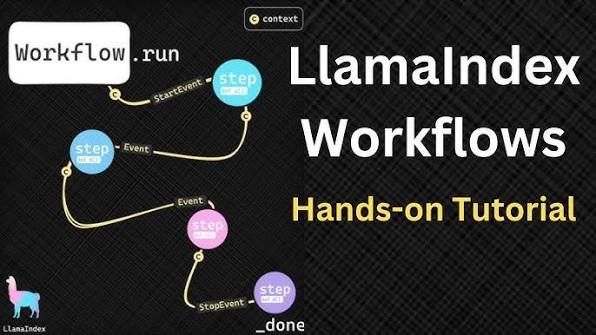
LlamaIndex started as a retrieval-augmented generation (RAG) library, but its Workflows module has grown into a real agent framework in its own right.
It runs on an event-driven model where steps fire off based on events instead of following a fixed order. That makes it a natural fit for agents pulling from large and messy data sources.
And it's a similar story to what's happening in adjacent AI fields where diffusion models are reshaping applied use cases like interior design. The underlying tech is maturing fast and the framework layer is finally catching up.
Strong points:
- Built for agents that lean heavily on retrieval and document-heavy work
- The event-driven design handles asynchronous and unpredictable workflows without much fuss
- Deep integration with vector databases and indexing tools
- Less overhead than building a custom RAG pipeline from scratch
If your agent's main job is finding, reading, and reasoning over piles of information, this framework can do most of the heavy lifting for you.
How to Choose the Right AI Agent Framework
| If your priority is... | Consider... |
|---|---|
| Long-term production stability | LangGraph |
| Speed of prototyping | CrewAI |
| Enterprise governance and compliance | Microsoft Agent Framework |
| Deep integration with one model provider | Claude Agent SDK |
| Heavy document and data retrieval | LlamaIndex Workflows |
Pick the AI Agent Framework That Fits Your Needs
No single framework wins every category, and the landscape keeps shifting under our feet.
LangGraph earns its reputation when reliability matters more than speed. CrewAI wins when you need to test an idea this week, not next quarter. Similarly, Microsoft Agent Framework makes sense once your infrastructure already lives in Azure.
Claude Agent SDK suits teams that want a tight build on one provider. And LlamaIndex Workflows is the obvious pick when your agent's real job is making sense of a mountain of data.
The right choice depends on what you're building and where it needs to run six months from now, not how good it looks in today's demo.
Starting an agent project this year? Don't just grab the framework with the most GitHub Stars. Write down what you need, whether that's compliance, speed, or data retrieval, and let that guide your decision.
Build a small proof of concept with two of these frameworks before you commit to one. A few extra hours comparing them now can save you months of rework later.
For more developer guides, framework breakdowns, and hands-on tutorials to sharpen your build, head over to Our Code World and keep the momentum going.